Fleetwood Mac There Will Be Darkness Again
Fleetwood Mac: the story backside Rhiannon

It makes sense that what has become Stevie Nicks's signature song was inspired by a kind of ancient magic. Bibliomancy, a mystical practice dating back to the 1700s, holds that if a volume is picked upward and opened to a page at random, the first discussion or sentence one sees will reveal some kind of epiphany. Only the book that Nicks picked up in 1974 – one that would somewhen help launch her into superstardom – didn't exactly seem full of divine promise.
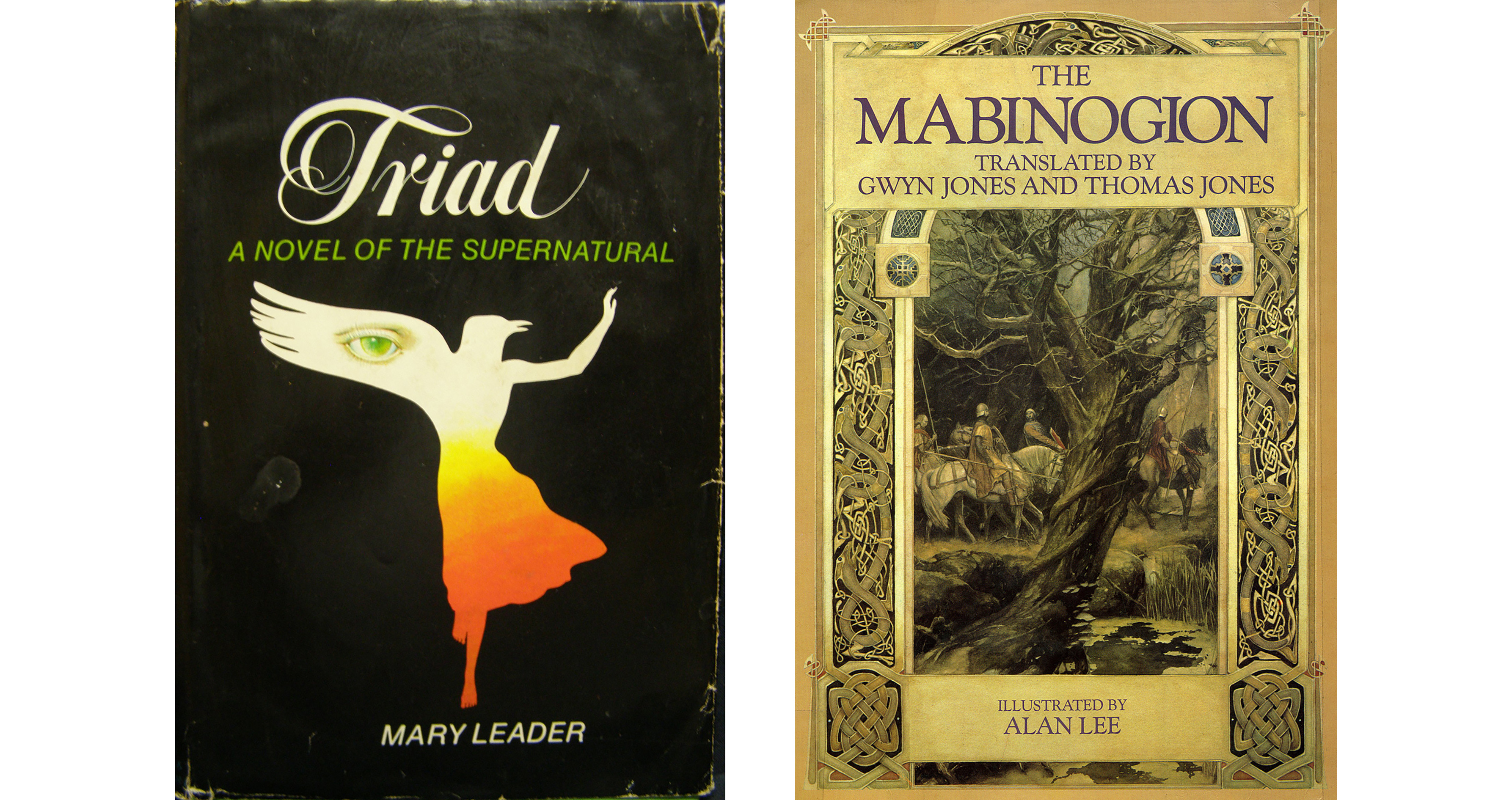
"It was just a stupid fiddling paperback that I found somewhere at somebody'due south house, lying on the couch," Nicks says more than forty years on. "Information technology was called Triad [written by Mary Leader] and information technology was all about this girl who becomes possessed by a spirit named Rhiannon. I read the book, just I was so taken with that proper name that I idea: 'I've got to write something well-nigh this.' So I sat downwards at the piano and started this song virtually a woman that was all involved with these birds and magic.
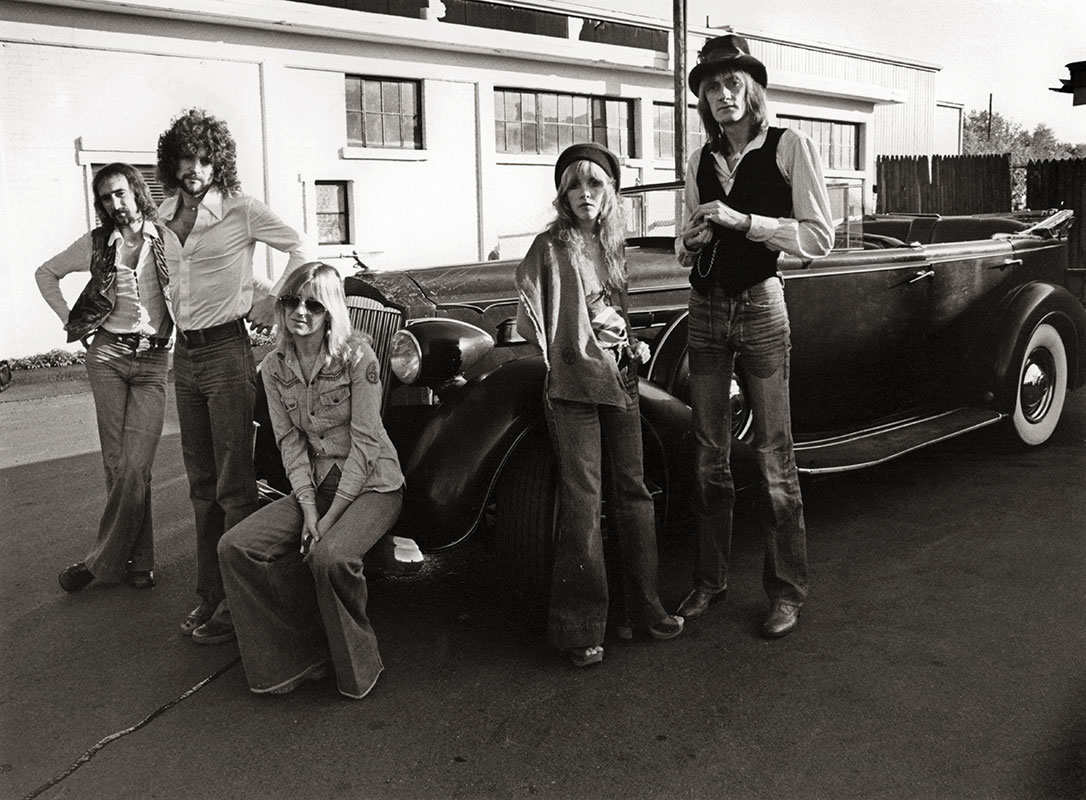
"I still have the cassette tape of when I was first writing it," she continues. "Lindsey [Buckingham, Nicks's musical and then romantic partner] came in and I said: 'We have to go to a park and record the sound of birds rising.' And he looked at me similar I was crazy. And I said: 'Don't you remember Rhiannon is a beautiful name?' And he said: 'Yeah, information technology is a beautiful name.'"
True to its witchy ancestry, in time the song would reveal deeper significance. "I come to find out, after I've written the song, that in fact Rhiannon was the goddess of steeds, maker of birds," Nicks explains. "Her three birds sang music, and when something was happening in war you lot would see Rhiannon come riding in on a horse.
This is all in the Welsh translation of The Mabinogion, their volume of mythology. When she came you'd kind of blackness out, so wake up and the danger would be gone, and you'd see the three birds flying off and yous'd hear this piffling song. So in that location was, in fact, a song of Rhiannon. I had no thought most any of this."
Nicks'southward concerns in the autumn of 1974 were more down-to-earth. Working every bit a waitress, she was living with Buckingham, writing for the follow-up to the pair's generally ignored debut anthology, Buckingham-Nicks, and struggling to stay upbeat nearly her future. Meanwhile, their producer, Keith Olsen, met Fleetwood Mac drummer Mick Fleetwood, who was looking for a replacement for the band's guitarist, Bob Welch. Olsen played Fleetwood a few Buckingham-Nicks tracks. Fleetwood was impressed. Although he initially wanted Buckingham, and Olsen every bit a producer, Lindsey insisted information technology had to be a package bargain that included Stevie.
"Who knows?" she says today. "It's possible if that hadn't happened that I would've gone dorsum to school and never had a music career."
Joining the residue of Fleetwood Mac in Sound Metropolis Studios in Los Angeles, the pair were nervous and excited about their new roles with the band. Of the magic moment when they first harmonised with Christine McVie, Mick Fleetwood later said at that place was an "undeniable awareness of rightness" about the vocal sound. "It was if Merlin himself could not take concocted a spell more perfect."
And the spell extended to Rhiannon. With Buckingham'southward finger-picked guitar line, an offbeat snaky groove from Fleetwood and bassist John McVie, and ethereal background vocals, Nicks's raw piano demo magically came to life.
"What the band does, and have ever washed," she says, "is take the skeleton of a song and mankind information technology out. They adapt right underneath my fiddling skeleton."
The self-titled album (too known equally the White Album) that launched the most successful and enduring version of Fleetwood Mac was released in July 1975. Chosen as the second unmarried, Rhiannon went to No.11 in the US but failed to catch on in the U.k. (when it was re-released two years afterward it reached No.46).
But the song'due south significance went far beyond chart positions. Information technology quickly became a live showcase for Nicks and a cornerstone of the band's image and mythology. On stage, whirling with chiffon scarves, blonde pilus tumbling out from beneath a elevation chapeau, Nicks would push button the song to six minutes, building to a frenzy on the outro (_'Dreams unwind/Love's a land of mind_') that Fleetwood said "was like an exorcism".
- How George Harrison Made The Greatest Beatles Solo Album Of Them All
- The top 10 all-time Paul McCartney & Wings songs
- The Fleetwood Mac Quiz
- Inside Jimi Hendrix'due south first ever live gig
"Rhiannon is a heavy-duty vocal to sing every night," Nicks said in 1976. "On phase information technology'due south really a listen tripper. Everybody, including me, is only blitzed by the terminate of it. And I put out then much in that song that I'm nearly down. At that place's something to that song that touches people. I don't know what it is just I'one thousand really glad information technology happened."
In the years since, Rhiannon has been covered by anybody from Waylon Jennings to Taylor Swift to endless American Idol hopefuls. And it remains a staple in the reunited Mac'south shows in 2015. Along the way, the strange magic from that flake of bibliomancy has continued to surprise Nicks.
"Years later, somebody sent me a set of iv books written by a lady named Evangeline Walton," she says. "She spent her whole life translating The Mabinogion and the story of Rhiannon. She lived in Tuscon. I went there in 1977, after Rhiannon had been a big huge hit. Her house was totally Rhiannon. She spent her whole life on the story. She never married. She had in essence almost become Rhiannon. And it was trippy.
"She had heard almost the vocal. She told me nigh her life and how she had been entranced by the name, just like I had. It'due south so interesting, because her last book was in 1974, and that'due south right when I wrote Rhiannon. So information technology's similar her work ended and my work began."
Source: https://www.loudersound.com/features/the-story-behind-the-song-rhiannon-by-fleetwood-mac
0 Response to "Fleetwood Mac There Will Be Darkness Again"
Post a Comment